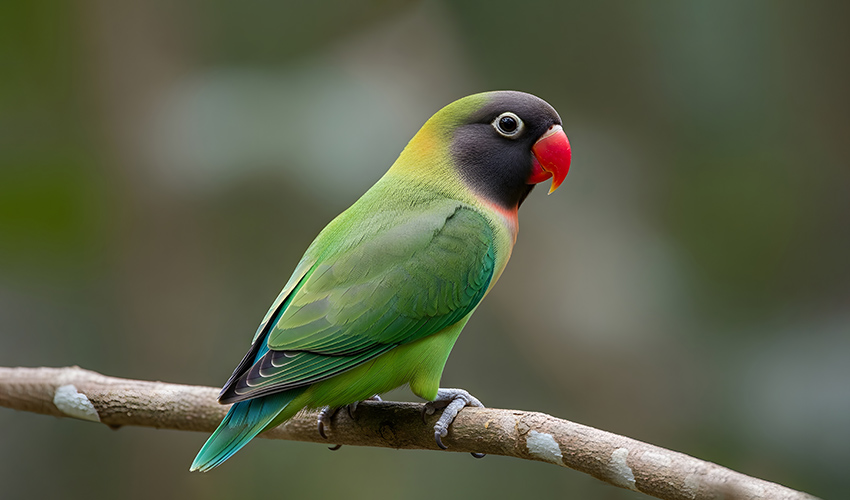

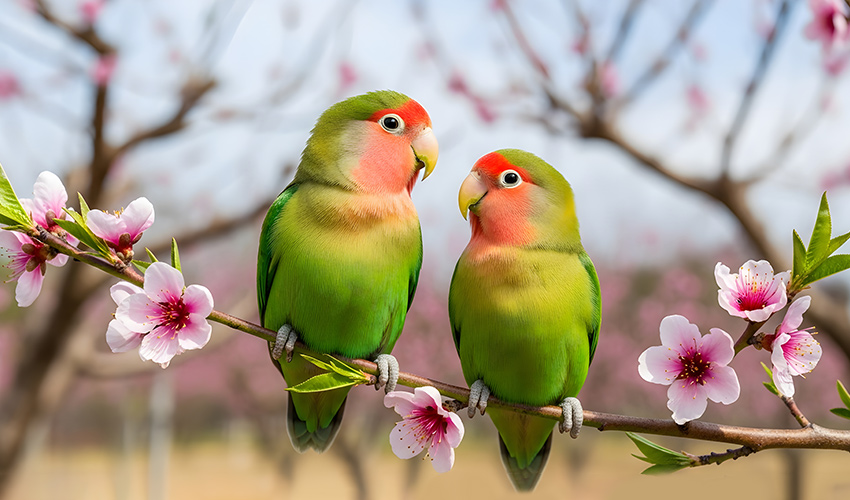
The Peach-faced Lovebird (rosy-faced lovebird) is one of the most charming and recognizable small parrots in the world. Famous for its warm peachy face, curious personality, and strong bonding behavior, this bird has become a favorite among bird lovers and responsible pet keepers. Native to dry regions of southwestern Africa, it adapts well to many environments and is known for being social, vocal, and surprisingly intelligent for its size.
Often called a “mini parrot with a big attitude,” this species is intelligent, playful, and curious. With the right care, enrichment, and nutrition, it can become a long-term companion and an unforgettable part of any bird-friendly home.
Quick Identification
A key trait that makes this bird easy to identify is its compact body, short tail, and bright face color.
Average length: 5-7 inches
Weight: 40-60 grams
Wingspan: about 4.5-6 inches
In terms of look and shape, many people compare it to a small, round-bodied parrot. It is sometimes casually referred to as a peach face parrot, especially by beginners who are new to the lovebird family.
Scientific Classification
Kingdom: Animalia
Phylum: Chordata
Class: Aves
Order: Psittaciformes
Family: Psittaculidae
Genus: Agapornis
Species: Agapornis roseicollis
Habitat and Range
In the wild, peach-faced lovebirds are found mainly in Namibia and Angola. They naturally live in dry environments such as:
- semi-desert landscapes
- savannas
- woodland edges
- areas near farms and villages
They are not long-distance migratory birds, but they may move locally to follow water sources and seasonal food supply. During harsh dry months, flocks often gather near rivers, wells, and cultivated fields where survival is easier.
Diet
They are adaptable eaters, but their diet must stay balanced to support good feather health, stable energy, and a long lifespan.
Primary Food
- grass seeds and grains
- small berries
- leafy greens
- fruit pieces
- occasional insects
Seasonal Food Changes
In the wild, their diet shifts depending on rainfall:
- Rainy season: more soft greens and expanding seed variety
- Dry season: heavier reliance on hardy seeds and grains
Behavior and Sounds
This bird species is known for being active, affectionate, curious, and sometimes stubborn. They enjoy climbing, chewing, exploring, and interacting with their environment.
A standout trait is vocal communication. The sounds include short chirps, squeaks, chatter, and alert calls. While they are not as deafening as some larger parrots, their frequent vocalizations can still be noticeable in quiet homes.
Nesting and Breeding
They are famous for their pair bonds, and this species shows strong nesting instincts when mature.
Mating
Pairs often show bonding behaviors like:
- mutual preening
- feeding each other
- sitting closely together
- exploring nest areas
Eggs & Incubation Period
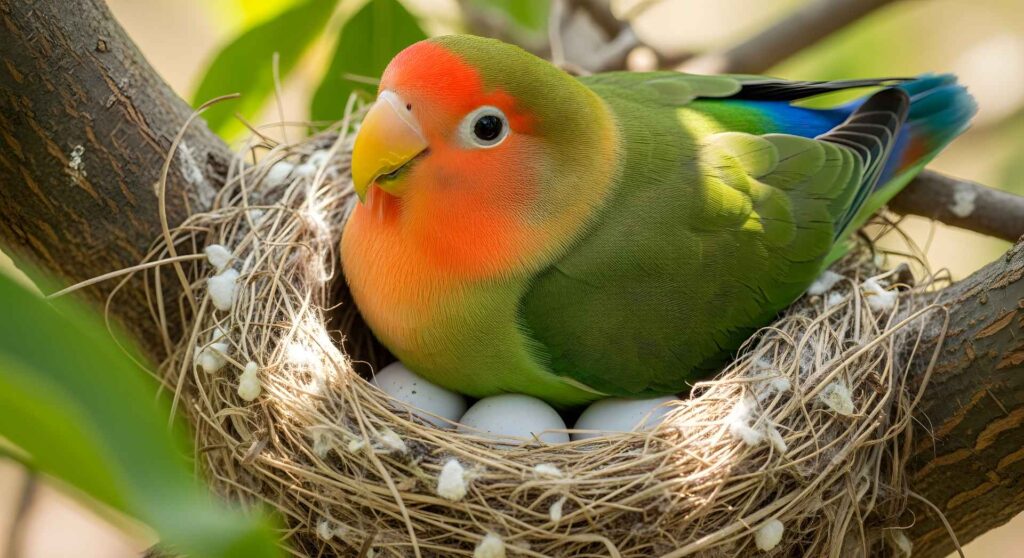
A female typically lays 3-6 eggs. Incubation lasts around 21-24 days, with the female doing most of the sitting while the male supports her by bringing food.
Chick Development
After hatching, chicks are blind and helpless. Over time:
- Down feathers appear in the first week
- Stronger feather growth begins in weeks 2-4
- Chicks begin moving more actively
- Fledging usually happens around 5-6 weeks
Young birds may still depend on parents a bit longer as they learn to feed independently.
Lifespan, Predators, and Survival
In captivity, a healthy lovebird can live a long time with proper nutrition and care. Lovebird lifespan is commonly around 10-15 years, and some individuals may live longer with ideal conditions.
Predators in the Wild
Their natural predators include:
- birds of prey (hawks and eagles)
- snakes
- wild cats and larger mammals
Survival Adaptations
They survive through:
- flock communication
- quick flight
- strong social bonds
- choosing safer nesting locations
Conservation Status
This species is generally classified as “Least Concern” on global conservation lists. However, local habitat loss and trapping can still create pressure in certain regions.
Peach Faced Lovebird Colors
One reason this bird is so popular is the huge range of beautiful color mutations. The colors can include many variations beyond the classic green body and peach face.
Some popular variations include:
- yellow peach-faced lovebird (bright warm tones with lighter body colors)
- blue peach-faced lovebird (a stunning mutation with blue body shading)
- peach-faced lovebird blue (often used to describe blue mutation lovebirds)
Peach Faced Lovebird Care
Proper daily care plays a major role in preventing stress, biting habits, and feather problems. The common care includes attention to housing, food, cleanliness, and mental stimulation.
Cage Setup
A good cage should be wider than it is tall, allowing room for movement and wing stretching. Key cage essentials include:
- safe wooden perches
- chew toys
- swings and climbing options
- Food and water bowls are kept clean daily

Mental Stimulation
Lovebirds are intelligent and easily bored. They thrive with:
- shredding toys
- foraging activities
- safe social time
- routine and calm handling
Social Needs
A single bird needs daily interaction. A paired bird needs bonding space and should still be monitored for aggressive breeding behavior.
Many people call this species a peach-faced lovebird parrot because it behaves like a parrot in a smaller, easier-to-handle body.
How to Attract Peach Faced Lovebird to Your Backyard?
In most regions, these birds won’t appear naturally unless they exist as feral populations. Still, in areas where they are already present, bird lovers can make their outdoor environment more welcoming by:
- providing fresh water sources
- planting bird-friendly shrubs and trees
- offering safe feeding areas
- avoiding pesticide use
It’s important to remember that attracting non-native birds can sometimes disturb local ecosystems. Observation and care should always be responsible.
Interesting Facts
Here are some memorable facts about this species:
- They are famous for their strong pair-bonding and affectionate behavior
- They often enjoy shredding paper and carrying nesting material
- They are playful climbers and love exploring toys
- They can be bold and confident despite their small size
- They thrive best with mental stimulation and routine
If you enjoy learning about colorful companion birds, you may also Visit Birdsglobe for more bird guides.
FAQ’s
Is this bird a good choice for beginners?
Yes, if the owner is consistent with interaction, enrichment, and healthy food.
Do they talk like larger parrots?
They can mimic sounds, but they are not known for clear speech like some larger parrots.
Can they live alone?
They can, but they are social birds and don’t do well with neglect.
What is the biggest mistake people make?
Feeding only seeds is a common issue that affects long-term health.