
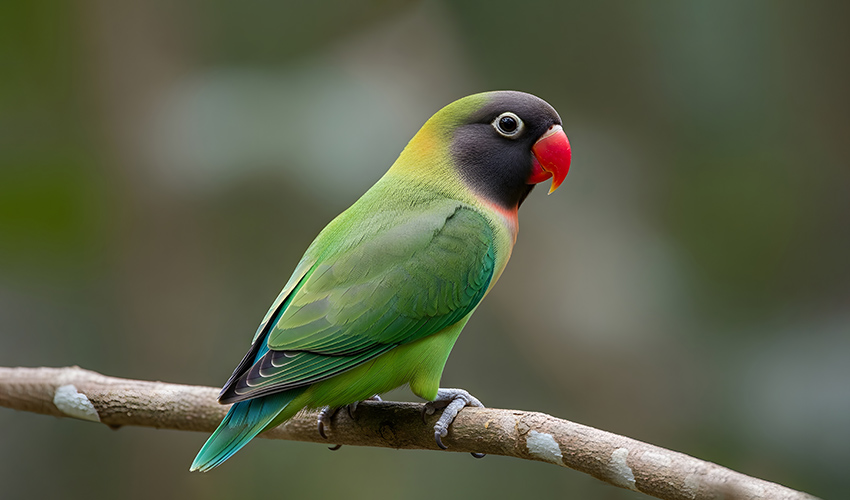
The Black-collared Lovebird, also known as Swindern’s Lovebird, is one of the most mysterious and least commonly seen lovebird species in the world. Unlike popular pet lovebirds, this species is rarely kept in captivity and remains closely tied to its natural forest habitat in Africa.
Identification
The Black-collared Lovebird is a small, compact parrot recognized by the dark collar marking around its neck, which gives the species its name. It has a subtle but elegant appearance compared to more colorful lovebirds.
This species is often overlooked due to its secretive nature and preference for dense forests, making sightings uncommon even within its native range.
Scientific Classification
- Common Name: Black-collared Lovebird
- Scientific Name: Agapornis swindernianus
- Family: Psittaculidae
- Order: Psittaciformes
- Genus: Agapornis
The genus Agapornis includes nine known lovebird species, most of which are popular in aviculture except the Black-collared Lovebird.
Physical Appearance
Size and Weight
Black-collared Lovebirds typically measure around 13-14 cm (5-5.5 inches) in length and weigh approximately 40-45 grams. Their small size makes them agile flyers within forest canopies.
Color and Markings
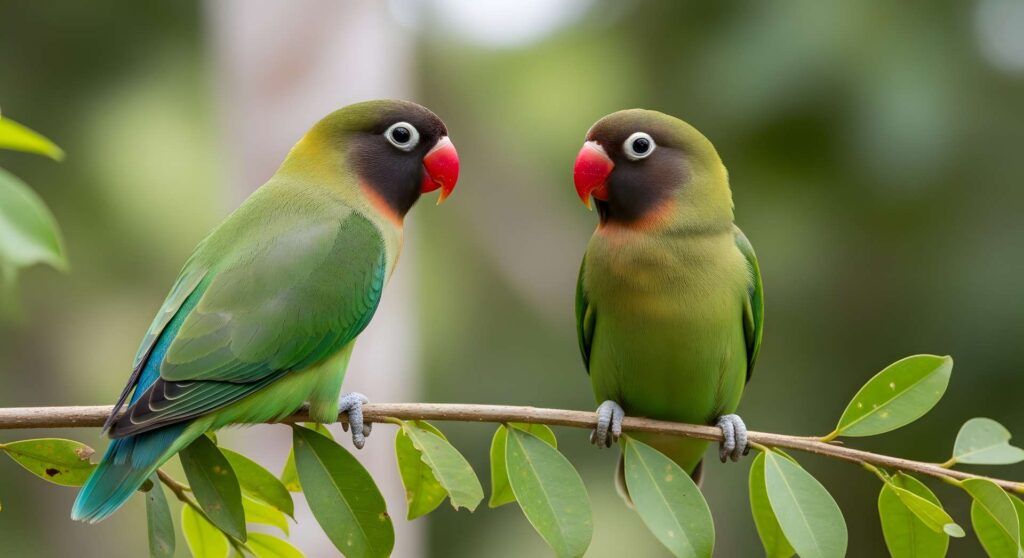
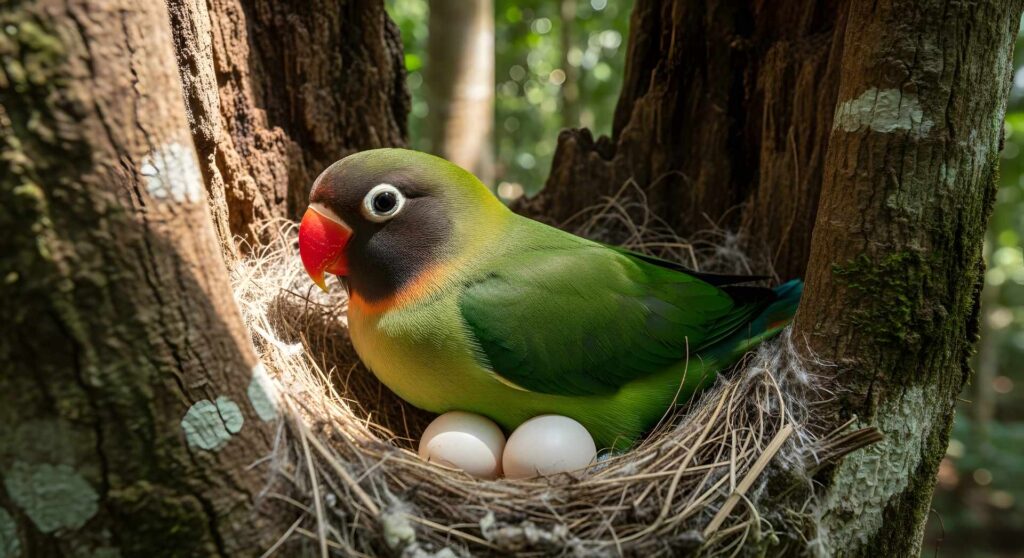
- Predominantly green body
- A distinct black collar or band around the neck
- Pale yellow-green chest
- Dark gray to blackish head
- Red beak is typical of lovebirds
Wingspan and Body Shape
They have short, rounded wings and a compact body, ideal for maneuvering through dense vegetation.
Male vs Female Differences
Males and females look nearly identical, with no obvious sexual dimorphism. DNA testing or behavioral observation is usually required to determine sex.
Habitat and Distribution
Natural Habitat
The Black-collared Lovebird inhabits dense tropical rainforests, lowland forests, and forest edges. It relies heavily on fig trees and tall canopy cover.
Geographic Range
This species is native to Central and West Africa, including:
- Cameroon
- Republic of Congo
- Democratic Republic of Congo
- Equatorial Guinea
- Gabon
Preferred Climate
They thrive in warm, humid, tropical climates with abundant rainfall and dense vegetation.
Diet and Feeding Habits
Primary Food Sources
In the wild, Black-collared Lovebirds primarily feed on:
- Figs
- Fruits
- Seeds
- Berries
- Occasionally insects
Their heavy reliance on figs is one reason they struggle in captivity.
Feeding Behavior
They forage quietly in the upper forest canopy, often in small groups or pairs, making them difficult to observe.
Behavior and Lifestyle
Social Behavior
Like other lovebirds, they are social and typically seen in pairs or small flocks. Pair bonding is strong, reinforcing the lovebird’s reputation.
Daily Activity
They are diurnal, most active during early morning and late afternoon.
Vocalization
Black-collared Lovebirds have softer calls compared to louder lovebird species, helping them remain hidden in dense forests.
Breeding and Reproduction
Mating Season
Breeding usually coincides with periods of abundant food, especially fig availability.
Nesting Habits
They nest in tree cavities, high above ground, providing safety from predators.
Eggs and Incubation
- Clutch size: 3-4 eggs
- Incubation period: 22-24 days
- Females handle most incubation
Chick Development
Chicks fledge after about 6-7 weeks, remaining dependent on parents for some time after leaving the nest.
Lifespan and Survival
Average Lifespan
In the wild, Black-collared Lovebirds are estimated to live 10-15 years, though exact data is limited due to rarity.
Predators
Natural predators include:
- Snakes
- Birds of prey
- Tree-climbing mammals
Survival Adaptations
Their green plumage offers excellent camouflage, while their quiet behavior reduces detection by predators.
Conservation Status
IUCN Status
The Black-collared Lovebird is listed as Least Concern.
Major Threats
- Habitat loss due to deforestation
- Logging of tropical forests
- Limited range distribution
Despite its status, ongoing forest destruction could impact populations in the future.
Why are Black-collared Lovebirds Rare in Captivity?
Unlike species such as the Peach-faced Lovebird, the Black-collared Lovebird is extremely rare in the pet trade.
Reasons include:
- Specialized diet (especially figs)
- Stress sensitivity
- Poor adaptation to captive environments
- Legal and ethical restrictions in some regions
Comparison With Other Lovebirds
Feature
Black-collared Lovebird
Peach-faced Lovebird
Availability
Very rare
Very common
Habitat
Dense rainforests
Savannas & woodlands
Diet
Fig-heavy
Seeds, fruits
Pet suitability
Not suitable
Excellent
Importance in the Ecosystem
Black-collared Lovebirds play a role in:
- Seed dispersal
- Forest regeneration
- Maintaining fig tree ecosystems
Their dependence on native forests makes them indicators of healthy rainforest environments.
Interesting Facts
- It is the only lovebird species with a black neck collar
- Rarely seen even by experienced birdwatchers
- Highly dependent on fig trees for survival
- One of the least studied lovebird species
FAQ’s
Is the Black-collared Lovebird a good pet?
No, this species does not adapt well to captivity and is best observed in the wild.
Why is it so rare compared to other lovebirds?
Its specialized diet, forest habitat, and low presence in aviculture contribute to its rarity.
Where can Black-collared Lovebirds be found?
They are native to Central and West African rainforests.
Can it interbreed with other lovebirds?
There is no reliable evidence of successful hybridization in captivity.