
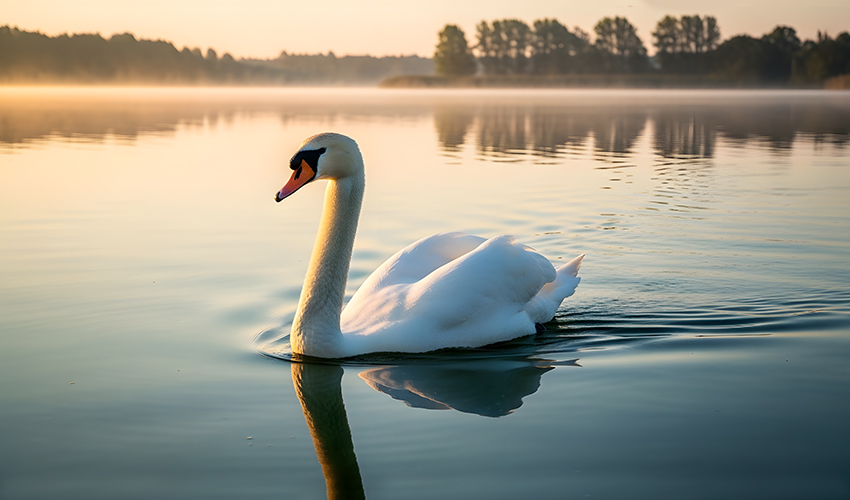
The Mute Swan is one of the most elegant and recognizable waterbirds in the world. With its bright white body, long “S-shaped” neck, and confident posture, this swan is often seen gliding across lakes, ponds, and calm rivers as if it owns the place.
Quick Identification
A fast way to recognize the mute swan is by its large, white body, long, curved neck, and orange bill with a noticeable black knob. It frequently holds its neck in a graceful curve and may raise its wings slightly in a dramatic “arched” posture while swimming.
In parks and urban lakes, it’s often the biggest bird on the water, making it easy to identify even for beginners.
Scientific Classification
Common name
Mute Swan
Scientific name
Cygnus olor
Family
Anatidae
Order
Anseriformes
Genus
Cygnus
Physical Appearance
Size and Weight
Adult swans are among the heaviest flying birds. A California invasive species factsheet describes them as extremely large, measuring roughly 4-5.5 feet long and weighing around 25-30 pounds.
Color and Markings
Adult Mute Swans are typically:
- Pure white with a black facial patch
- Orange bill with a black knob
- Dark legs and webbed feet
Young birds (cygnets) are usually grayish or brownish and gradually become white as they mature.
Wingspan
Most individuals have an impressive wingspan up to nearly 8 feet, making mute swan flying an unforgettable sight, with slow, powerful wingbeats and a long glide across open water.

Head Details
The mute swan head looks smooth and rounded, and its black facial patch makes the orange bill stand out even more.
Male vs Female
Males are usually larger and have a more prominent knob. Females tend to look slightly slimmer with softer facial features, though this can be hard to judge without a side-by-side comparison.
Juveniles and Immature Swans
A juvenile mute swan is usually grayish-brown rather than pure white, and it may have a duller bill. Similarly, an immature mute swan may still show darker feathers and a less developed knob compared to adults, especially in its first year.
Habitat and Range
The mute swan habitat includes calm freshwater bodies and slow-moving waterways, such as:
- Lakes
- Ponds
- Slow rivers
- Marshes and wetlands
- Coastal bays in some regions
Range and Movement
The mute swan range covers Eurasia, but they have been introduced to many other areas. Some populations stay in one area year-round, while others shift location depending on weather and food availability.
Countries or Continents Found
Today, They are commonly found in:
- Europe
- Parts of Asia
- North America
A USDA APHIS technical report explains that Mute Swans were brought to North America in the late 19th and early 20th centuries for ornamental ponds and collections, and then expanded from early populations into other regions.
Preferred Climate
They prefer temperate climates with open water, but can survive cold winters if water remains unfrozen or food is accessible.
Migration Patterns
Mute Swans are not always long-distance migrants. In colder regions, they may move to nearby unfrozen waters rather than traveling thousands of miles. Their ability to remain resident often depends on access to open water and reliable vegetation.
Diet
The mute swan diet is largely plant-based, with a focus on aquatic vegetation. These birds use their long necks to reach underwater plants that many other waterbirds cannot access.
Primary Food
Their main diet includes:
- submerged plants and pond weeds
- algae and aquatic grasses
- shoreline plants and tender shoots
Seasonal Food Changes
Seasonal availability strongly affects feeding habits. In spring and summer, aquatic plants are abundant. In autumn and winter, swans may graze more on land near shorelines when underwater food becomes harder to reach.
Behavior and Sounds
Daily Activity
Mute Swans are active during daylight hours, spending time feeding, preening, swimming, and guarding territory.
Social Behavior
Outside the breeding season, they may tolerate other swans and waterbirds. During nesting season, they become protective and may chase intruders away with wing-flapping displays.
Sounds and Calls
Despite their name, they do make sound. The mute swan call can include soft grunts, snorts, and hisses. Many people describe the bird’s warning behavior as dramatic, especially when it raises its wings and hisses aggressively.
“Mute Birds” Confusion
A common misunderstanding is that mute swans are literally silent or part of a group of mute birds. In reality, “mute” reflects that they are generally quieter than other swan species, not silent.
Nesting and Breeding
Mating
Mute Swans often form strong, long-term pair bonds. During spring, pairs become protective, and the male may patrol the territory aggressively while the female prepares the nest.
Nesting
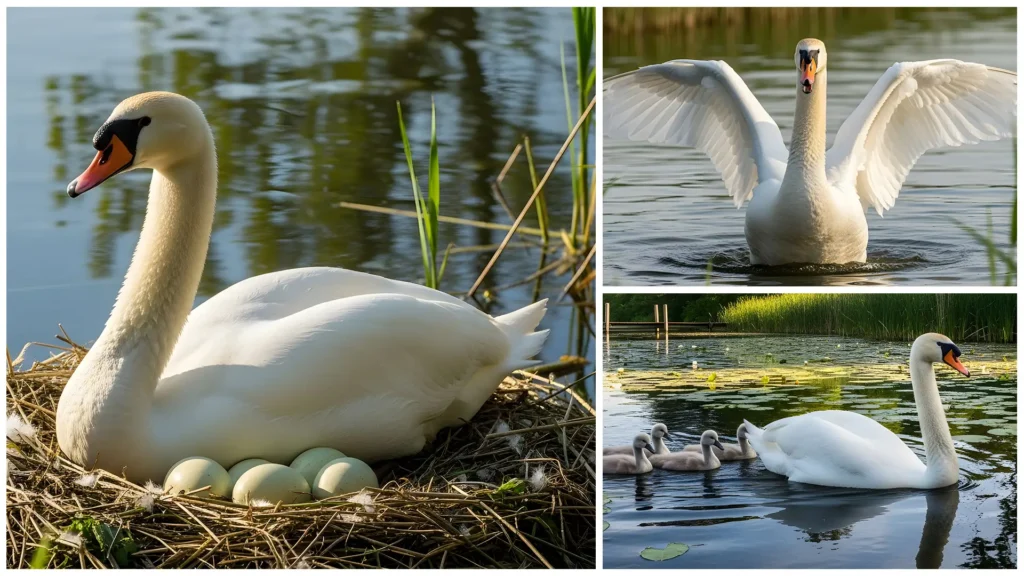
They build large nests as an open bowl, made from reeds, aquatic plants, and grasses, often in sheltered places like reed beds, small islands, or shoreline edges.
Eggs & Incubation Period
The mute swan eggs are typically large, pale, and laid in a clutch (1-7 eggs). Incubation generally lasts just over a month. During this time, the female stays on the nest while the male guards the area and keeps threats away.
Chick Development
After hatching, cygnets are able to swim quickly and follow their parents closely. Parents guide them toward feeding areas and protect them from predators. Their growth is rapid, and young swans gradually develop stronger feathers, better balance, and improved survival instincts over the following months.
Lifespan, Predators, and Survival
The mute swan lifespan can be surprisingly long; many adults survive multiple breeding seasons. According to the records, the oldest known Mute Swan in North America was at least 26 years and 9 months old.
Predators
Eggs and young cygnets are the most vulnerable. Common threats may include raccoons, foxes, snapping turtles, large birds of prey, and other predators, depending on the region.
Survival Strategies
Mute Swans rely on:
- strong parental protection
- large body size discourages attackers
- nesting in reeds or offshore vegetation for safety
- strong swimming ability
Conservation Status
IUCN Status
They are listed as Least Concern on the IUCN Red List globally.
Population Trend
In many regions, populations are stable or increasing.
Threats
Threats vary depending on whether the population is native or introduced. In native ranges, wetland loss can affect breeding areas. In introduced regions, human-wildlife conflict and management actions may influence local numbers.
Globally, this swan is not considered endangered and is widely established. However, conservation discussions differ depending on location. In several regions outside its native range, it is viewed as a mute swan invasive because it can displace native waterbirds and heavily impact aquatic vegetation. This concern is often linked to broader discussions about invasive swans and wetland ecosystem balance.
Human Connections
Cultural Importance
Mute Swans are widely associated with elegance and romance. They frequently appear in literature, paintings, and park landscapes across Europe and beyond.
A famous cultural reference is The Ugly Duckling, which tells the story of a swan mistaken for an ordinary duckling.
Birdwatching Value
For birdwatchers, Mute Swans are visually stunning and easy to observe. They are often photographed because they stay visible on open water and show dramatic wing and neck postures.
Human Interaction
In many city parks, Mute Swans have become comfortable around humans. However, feeding them bread is not recommended. Bread has poor nutrition and may lead to health issues in waterfowl.
Importance in the Ecosystem
Mute Swans contribute to wetland ecosystems by grazing large amounts of aquatic vegetation. This can reshape plant communities, which may be beneficial in some environments but harmful in others, especially where the species is introduced and impacts native wildlife.
Interesting Facts
Here are some standout facts that bird lovers enjoy:
- Mute Swans can look calm, but become very aggressive when guarding a nest.
- Their wings can be so large that takeoff sounds like a loud beating or “thumping.”
- Many pairs remain bonded for years, raising multiple broods over time.
- They often nest in reed beds, which can protect eggs from predators.
- The oldest recorded Mute Swan in North America lived over 26 years.
FAQ’s
Are Mute Swans aggressive?
They can be, especially during nesting season.
Are Mute Swans actually mute?
No. They still hiss, snort, and make soft sounds.
Where are mute swans native to?
They are native to parts of Europe and Asia.
What is mute swan?
A Mute Swan is a large white swan known for being quieter than other swans.