
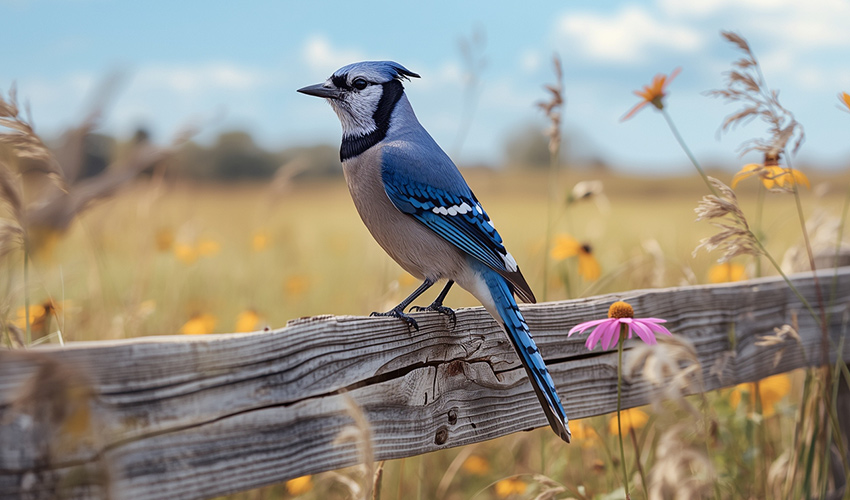
The blue jay is one of the most recognizable birds in North America, known for its bright blue plumage, bold personality, and loud calls. Often seen perched confidently on branches or hopping across lawns, a blue jay stands out not just because of its color but because of its expressive behavior.
Scientific Classification
Common & Scientific Name
- Common name: Blue Jay
- Scientific name: Cyanocitta cristata
Family
- Corvidae
Order
- Passeriformes
Genus
- Cyanocitta
Physical Appearance
Size and Weight
The average adult blue jay is about 9-12 inches long and typically weighs 2.5-3.5 ounces. This medium size makes it easy to spot, especially when it flies between trees or swoops down to feeders.
Color and Markings
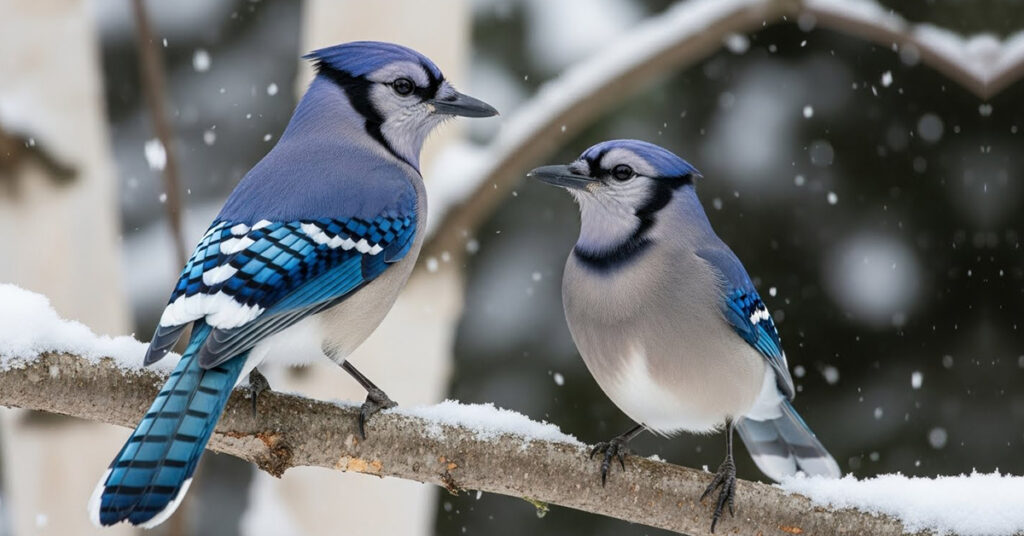
Blue jays have striking blue wings and back, with white underparts and black striping on the wings, tail, and face. Their signature crest can rise or fall depending on the mood.
Wingspan and Body Shape
With a wingspan of around 13-17 inches, the blue jay has a sturdy and rounded body built for strong, quick flights through forested areas.
Beak
The beak is thick, sharp, and slightly curved, perfect for cracking seeds, carrying nuts, and exploring different foods.
Male vs Female Differences
Male and female blue jays look very similar. Males may be slightly larger in some populations, but in most cases, they can’t be easily told apart without behavior observations.
Habitat and Distribution
Natural Habitat
The blue jay thrives in mixed forests, wooded suburbs, and parklands. They prefer areas with oak trees because those provide shelter and a steady supply of acorns.
Geographic Range
Blue jays are found across eastern and central North America and can also be seen in parts of southern Canada. Many regions report seasonal movement depending on weather and food availability.
Countries or Continents Found
They are primarily found in North America, especially the United States and Canada.
Preferred Climate
Blue jays do best in temperate climates, but they also handle cold winters well due to their flexible diet and ability to store food.
Diet and Feeding Habits
Primary Food Sources
Blue jays eat a wide range of items. Their diet includes seeds, nuts, berries, insects, and occasionally small animal matter.
Hunting or Feeding Techniques
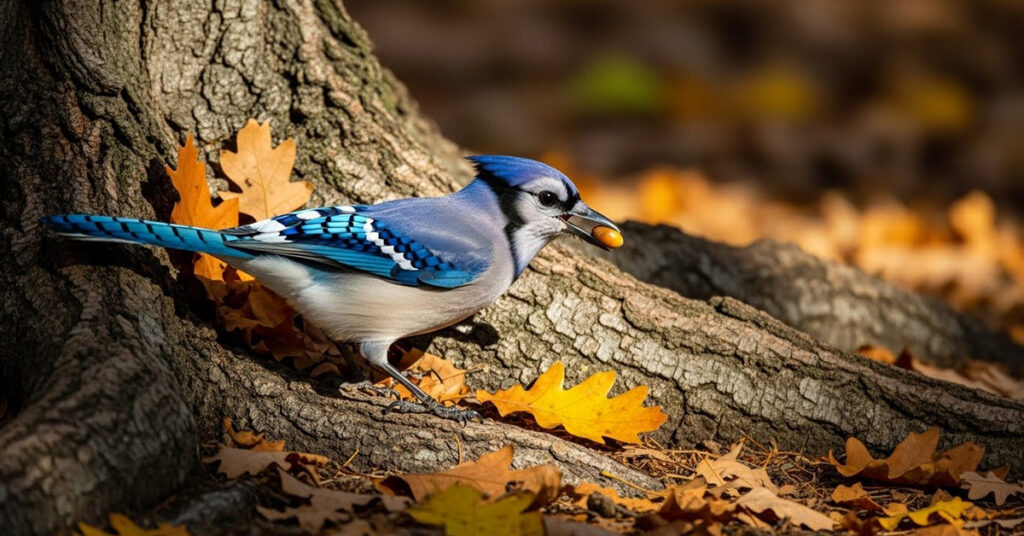
Blue jays are bold feeders and often grab food quickly before flying off to eat it privately. Some will cache food by burying it for later. This behavior makes them excellent seed dispersers and helps forests grow naturally.
Seasonal Diet Changes
In warmer months, blue jays eat more insects and fresh plant foods. In colder months, they rely more heavily on stored nuts and seeds. This seasonal flexibility helps them stay successful year-round.
Behavior and Lifestyle
Daily Activity
Blue jays are active during the day and are often busiest during early morning and late afternoon. They spend time foraging, exploring, and communicating with other birds.
Social Behavior
Blue jays can be both social and territorial. They may form loose family groups or small flocks, especially outside the breeding season. At feeders, they often dominate smaller birds.
Migration Patterns
Some blue jays migrate while others stay year-round. Migration patterns vary widely, and scientists still study why some populations travel and others do not.
Communication and Sounds
Blue jays are famous for their loud calls and mimicry. They can imitate hawk calls, which sometimes scares away other birds. This clever behavior helps them protect feeding spots and warn their group of danger.
Breeding and Reproduction
Mating Season
Breeding season typically begins in spring. During this time, pairs form strong bonds and begin preparing nesting sites.
Nesting Habits
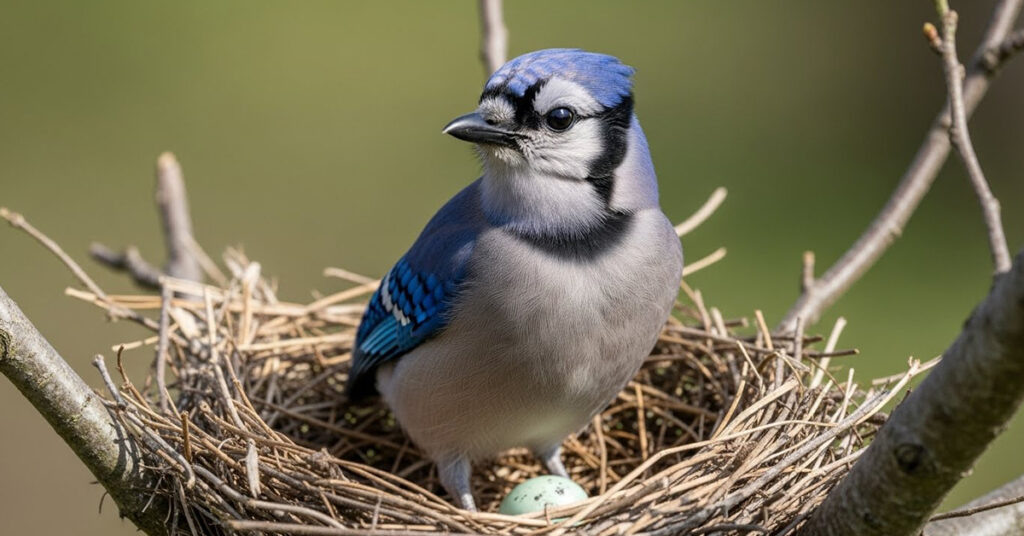
Blue jays usually build their own nests rather than use boxes. They prefer sturdy tree branches where they weave twigs, grass, and other plant material into a strong cup-shaped structure.
Eggs and Incubation
Blue jay bird eggs are usually light blue to brownish with darker speckling. Most clutches contain 3-6 eggs. Incubation lasts around 16-18 days, usually handled mainly by the female, while the male helps by bringing food and guarding the area.
Chick Development
After hatching, chicks grow quickly and are fed by both parents. They typically leave the nest about three weeks after hatching, though they may stay nearby for a while as they learn independence.
Lifespan and Survival
Average Lifespan in the Wild
Blue jays can live 7 years on average, though some individuals survive much longer with ideal conditions.
Predators
Common predators include hawks, owls, raccoons, snakes, and domestic cats. Eggs and young chicks are especially vulnerable.
Survival Adaptations
Blue jays survive through intelligence, alarm calling, caching food, and using their environment effectively. Their strong memory helps them relocate stored food in winter.
Conservation Status
IUCN Status
Least Concern
Population Trend
Most populations remain stable, though local declines can occur where woodland habitats are heavily reduced.
Threats
Major threats include habitat loss, pesticide exposure affecting insect food sources, and domestic predators such as outdoor cats.
Importance in Ecosystem
Blue jays play an essential role in seed dispersal, especially with acorns. Their habit of storing nuts and forgetting some of them helps grow new oak trees. They also contribute to insect control during warmer months by eating larvae and beetles. In many environments, blue jays act as ecosystem messengers, alerting other birds to danger with their loud calls.
Interesting Facts
Here are some fun facts about blue jays that make them even more fascinating:
- Blue jays aren’t actually blue because of the pigment their feathers reflect light, especially.
- Blue jay feathers can look brighter or darker depending on the angle of sunlight.
- They can mimic hawk calls to scare away threats.
- Their intelligence is similar to that of many birds in the crow family.
- A white blue jay is usually caused by a pigment condition like leucism, not a new species.
- They have unforgettable memories and can remember where they hid food weeks later.
- A bald blue jay may appear during molting or due to mites, and feathers usually grow back.
Human Connections
Cultural Importance
Blue jays appear in stories, folklore, and symbolism across different regions. They are often associated with boldness, intelligence, and communication.
Birdwatching Value
People love seeing them because they are colorful, expressive, and easy to spot. In many areas, seeing blue jays is considered a special part of a morning walk or backyard birdwatching session.
Human Interaction
Blue jays frequently visit yards, parks, and feeders. Many people enjoy blue jays in backyard spaces because they bring energy and movement to the environment.
A few simple strategies to attract blue jays:
- Offer peanuts, sunflower seeds, or suet
- Provide fresh water (especially in summer)
- Leave oak trees or plant native shrubs
- Use platform feeders, since jays prefer open space
FAQ’s
Are there birds that look similar to blue jays?
Yes. Birds like blue jays because several species share similar coloring or body shape.
Can a blue jay bird as a pet be kept legally?
In most places, keeping a native wild bird as a pet is illegal without permits. Blue jays are protected under wildlife laws in many countries.
What is the blue jay’s favorite food?
Nuts are a top favorite, especially peanuts and acorns.